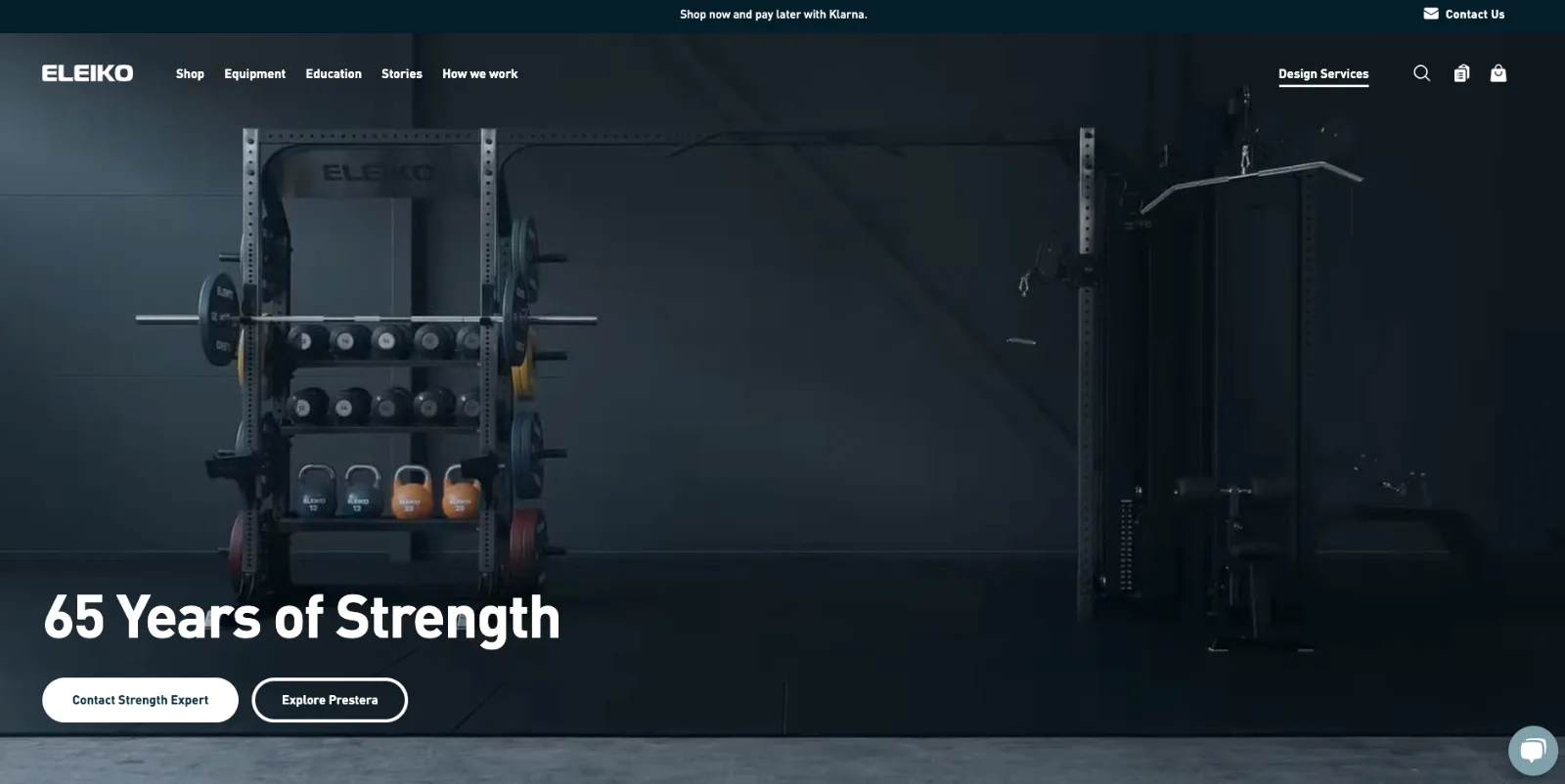
In 2020, Eleiko expanded into direct-to-consumer e-commerce
Previously, Eleiko had only sold to companies (B2B) all over the world, but in 2020 it launched an e-commerce in Lithium to be able to sell directly to end consumers. The timing could not have been better as the Covid pandemic hit hard in March of the same year, and with that the demand for home training also increased significantly. The launch of the new e-commerce took place at the beginning of April 2020, after a proper final sprint from the project group, and in connection with that they also requested a partner who could take responsibility for the digital marketing.
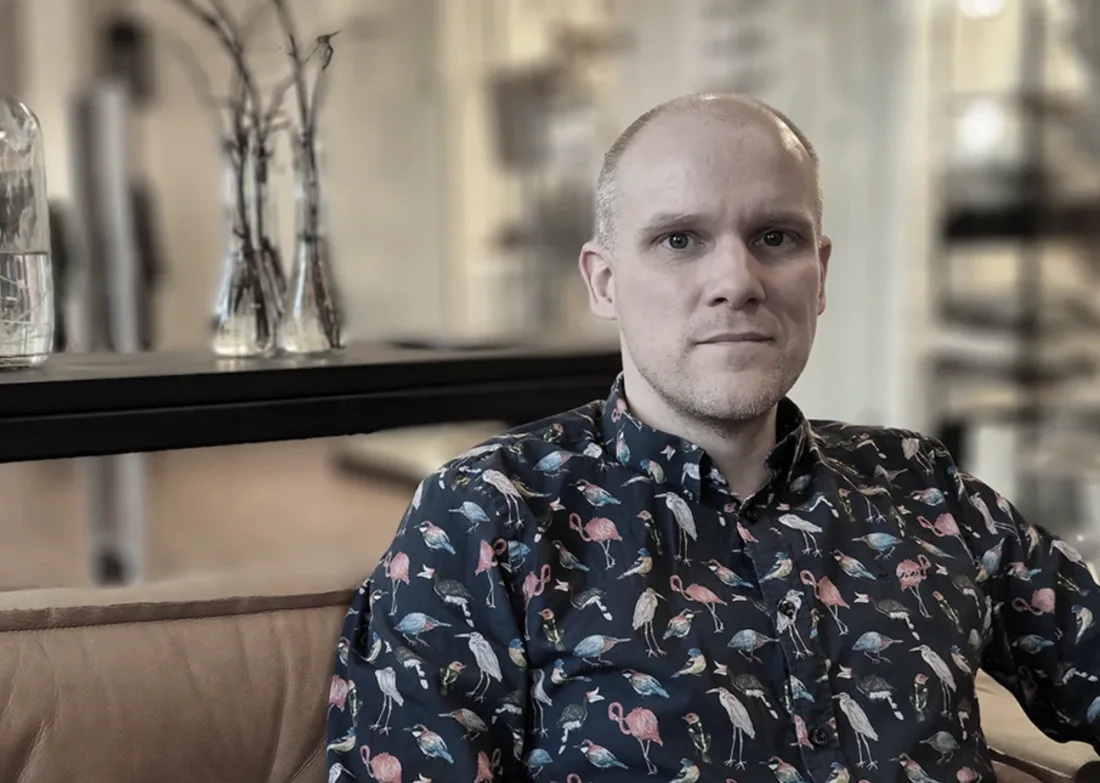
“At the time, I was working as a sales manager at WooCode and we had been given the glorious task of building Eleiko's new e-commerce. When I was asked about digital marketing by our client, Hans Blomberg, I picked up the phone and called my old friend Robin Pettersson at HERE. We had worked together on several projects before and our teams worked well together so this felt like a great opportunity to team up again”
Luis Carvajal, former Sales Manager, WooCode

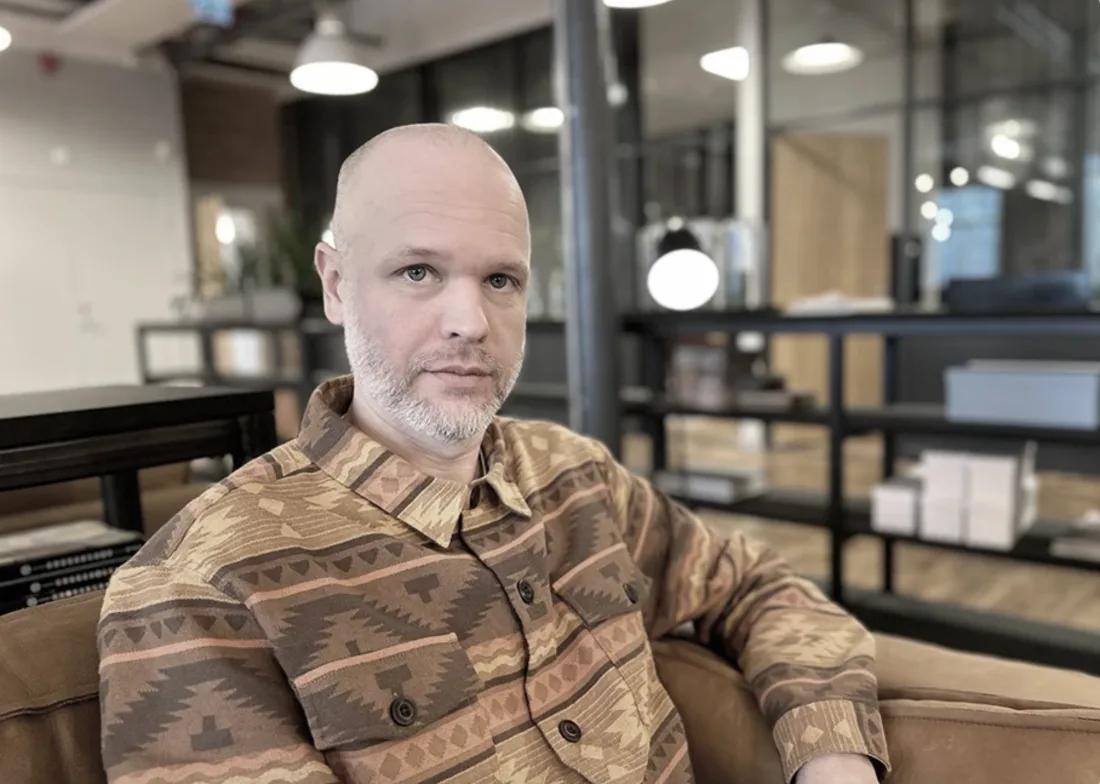
Luis, Robin and Hans met shortly afterwards in a meeting to discuss how to set up the collaboration and then it was up to Robin and the gang at HERE to come up with a proposal for a strategy.
“The question concerned how to drive traffic and sales on the new site in the best possible way and would include everything from data collection and tracking to Google Ads, SEO and Social Media. In addition, I needed to create a budget for the start-up and make a forecast of expected results, a complete Go-To-Market. One factor that facilitated the strategy phase in this case was that I was given a clear financial goal and basically free hands, which made it all the more fun”
Robin Pettersson, Digital Growth Specialist, HERE

A digital marketing strategy
Now began the big work for the project team at HERE, to develop a strategy that everyone in the team believed in and to create a clear and educational presentation of the strategy that Hans at Eleiko could then share with the management team before the start button could be pressed.
"After all, everyone had to more or less understand the plan before we could get the green light, with that said Eleiko's management team was extremely brave and quickly chose to trust us and the plan we presented. A plan that basically consisted of starting with five markets; Sweden, Norway, Denmark, Finland and the USA. The goal was then to scale up the markets that performed as quickly as possible and just as quickly to replace the markets that underperformed with new markets." continues Robin.
ROAS calculation and tracking implementation
Together with the finance department, a return on investment target (ROAS) was calculated, this target would then continuously guide the project group in the major strategic decisions along the journey. With a qualified ROAS target, it also became easy for the specialists to optimize their respective ad accounts and reallocate budget on an ongoing basis to the channels and campaign types that performed best. Something that, however, also required keeping track of the tracking pixels that each ad account provided, to enable as truthful attribution of sales as possible.
“Thanks to the developers at WooCode, it was relatively easy to get the tracking pixels in order for the different ad channels, despite the fact that the site existed in around fifty language versions with different domain extensions. Considering the size of the site, we are used to encountering some problems if the developers do not have a solid grasp of how the site is built, but in this project they had done everything right. Here, Hans as a client should also have a big eulogy who dedicated one of the developers to our team and gave us a full mandate to act as a client”
Gustav Önneslöv, Digital Growth Specialist, HERE
Google Looker Studio as a central governing document
The marketing manager for Eleiko at this time was Surya Cox and she also became the main responsible for the project's marketing activities from Eleiko's side. To ensure a smooth process, right from the start we established a routine for weekly meetings where we went through a number of key figures that were determined at the start of the collaboration, where one of the most important key figures was return per invested kroner (ROAS). The key figures were visualized together with costs in a report produced in Google Looker Studio, which quickly became the collaboration's central steering document.
“The dynamic report was crucial for the entire team to get an overview of the costs and results generated in the different channels as well as how each market performed overall. It gave us all a solid base to start from during our weekly meetings and thus simplified the major strategic discussions”
Niklas Johansson, Digital Growth Specialist, HERE
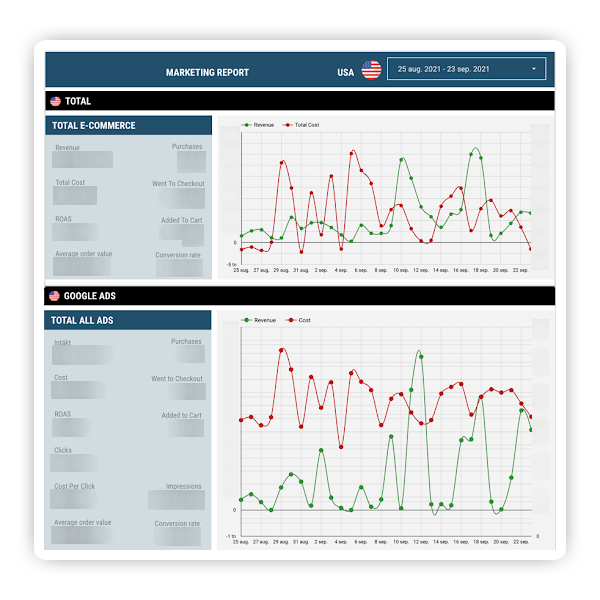
During the weekly meetings, they reviewed the results on each channel and market, discussed advertising material, while also turning and twisting other factors that had an impact on sales. One such influencing factor was of course the inventory balance. At this time, Eleiko had two warehouses, one European warehouse for the European market and one in the US, and when a top seller ran out of one of the warehouses, ad returns were dramatically affected in the associated markets. The fact that there were just two warehouses, combined with the number of markets, made it more difficult to discover where there was a mistake, as there was no overview system that could signal gaps in the range.
After discussions between Surya, Hans and the team at HERE, it was decided to dig deeper into the impact of inventory balance on ad returns and to make it easier for everyone working with marketing, HERE produced another dynamic report in Google Looker Studio where the inventory balance was visualized in real time down to the product level. The report retrieved data from a so-called product feed that was generated via Litium (the e-commerce platform) and was then combined with, among other things, sales data and advertising expenditure. Now the analysis became simple and it became easy for the project team to jointly develop a strategy on how to manage the rapid changes in the inventory balance to get more out of the marketing budget, and Google Looker Studio took on an increasingly important role in the final result of the project.
Meta Ads and new customer funnels
Operationally responsible for Meta Ads was Niklas Johansson from HERE who, based on his interpretation of the overall strategy, also applied what he chose to call new customer funnels. New customer funnels mean that with the help of video ads you can create a multi-stage rocket based on ad interactions. The purpose of a so-called new customer funnel is primarily to warm up cold customers - from when they are exposed to the brand for the first time all the way to a completed order - but also to more clearly distinguish which target groups actually generate purchases in the Retargeting phase (advertising to website visitors).
In practical terms, you create a series of ads where each target group is exposed to a specific video ad in the first step, if a person in the target group chooses to interact with the video, they qualify further down the funnel to see the next ad, and then the next ad, until they place their first order or are no longer considered relevant. Since Meta Ads themselves do not have a function to attribute sales to the ads that interacted with the target group in the early sequences of the buying journey (retargeting ads, i.e. ads directed at previous website visitors, often take all the credit), we developed our own model to be able to isolate and follow different target groups throughout the customer journey.
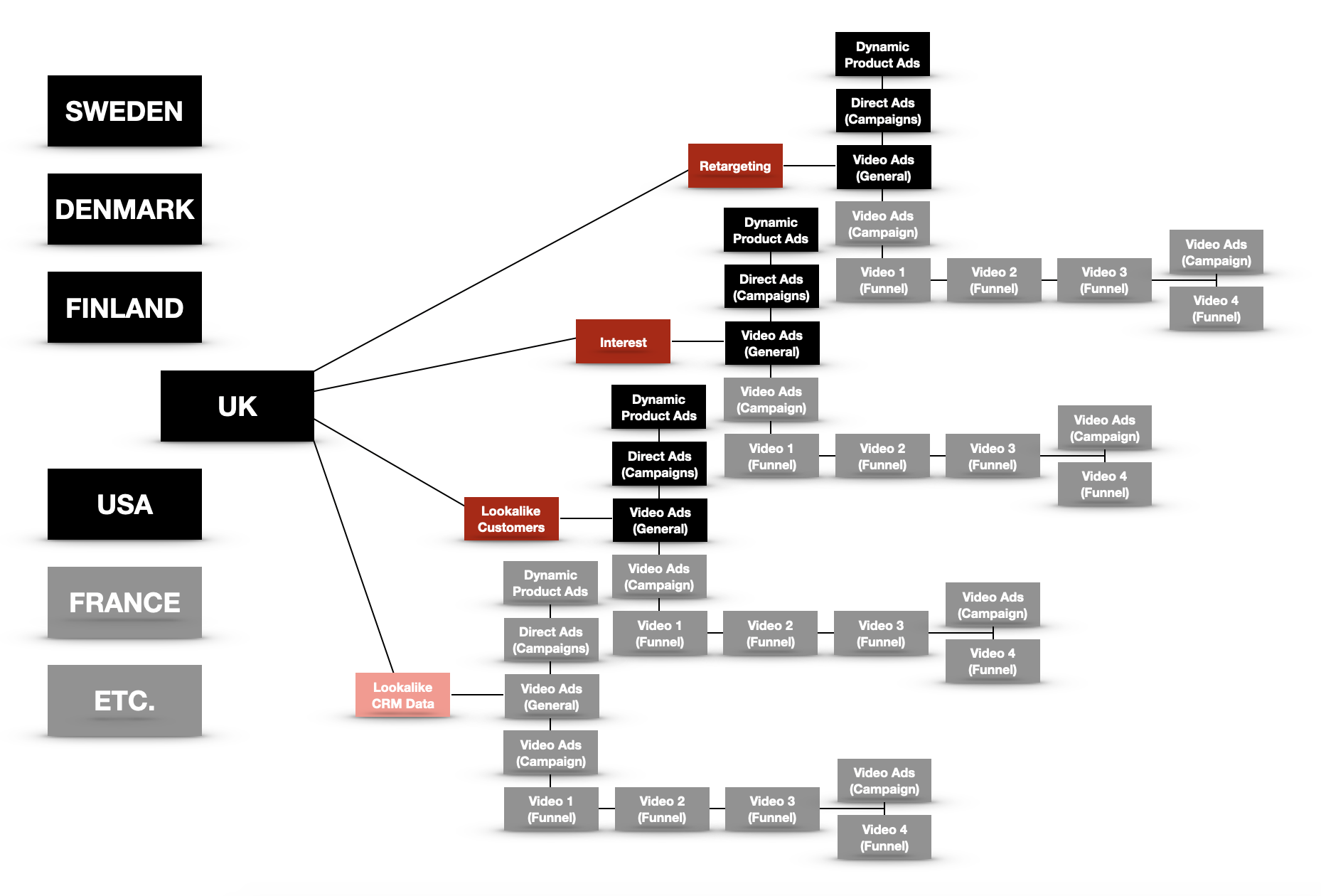
This model was instrumental in scaling up the project, as we could now see which of the new audiences being tested actually generated sales in the later stages of the customer journey.
Advertising strategies and account structures
In this project, they really had all the conditions to succeed; an internationally strong brand with quality and recognized products, a technically competent and courageous IT manager, a solid e-commerce partner through WooCode, a responsive and driven marketing manager and the opportunity to go international from the start. In addition, as I said, they had a clear financial target picture with an associated realistic budget. Now it was just about getting the job done.
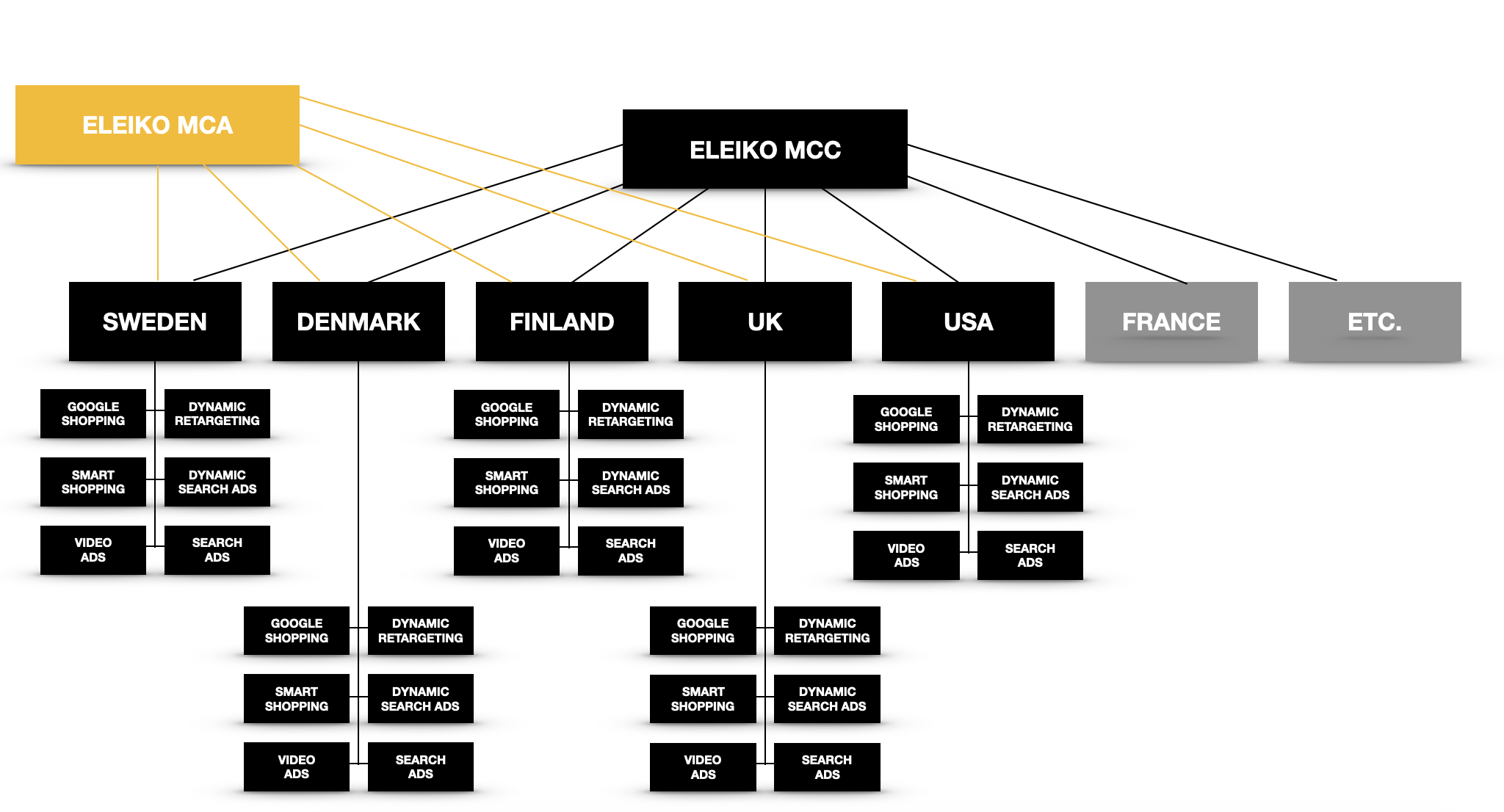
Gustav Önneslöv from HERE was responsible for Google Ads in all markets, and made a massive effort where he built up each market's account structure based on a few simple principles; first we will collect the lowest hanging fruit by meeting those who already know Eleiko, then we will re-advertise to those who have shown interest and visited the site, and finally we will work backwards in the customer journey and increase awareness of the brand.
More or less all ad variants that were available in Google Ads were applied here, and below is a simplified description of the set:
- The purpose of Google Shopping was to display Eleiko's range on product-specific keywords at the end of the customer journey.
- Text Ads/Search Ads would capture the broader category-related searches earlier in the customer journey.
- Dynamic Search Ads would pick up new search terms and trends that the existing ad campaigns missed.
- Dynamic Retargeting ads would, for a short period after each website visit, display the products they had shown interest in with the goal of converting a confirmed purchase intent.
- Static Display Ads and Video Ads on YouTube finally exposed the target group to educational and inspiring advertising messages aimed at creating a positive feeling for the brand - both at the beginning of the customer journey and some time after a completed purchase - in order to manage and develop the customer's relationship with the brand.
This basic principle became central to the entire advertising strategy for all channels and was applied to, among other things, Meta Ads in both Facebook and Instagram.
From 0 to 100 million in under 1 year
The result of our joint work was that Eleiko's e-commerce went from 0-100 million in turnover in less than a year. An impressive feat which of course requires that all the prerequisites are in place and that the brand and product range are highly sought after. This article describes parts of the process that was applied, but really only shows a small part of all the factors that made the result possible.
“We had the right people in the right place together with all the stars aligning! We had high goals when we started the project but never dared to believe that the journey would go as straight up as it did once we launched. HERE did a great job with Robin Pettersson at the helm and it has been a joy to have them on board. That everyone worked independently and purposefully within their assigned areas of responsibility was clearly decisive for the project's success”
Hans Blomberg, CTO & Partner, Eleiko Group